Chicken vs Veggie Stock: How to Make It from Scratch

Homemade chicken stock can help elevate your soup with incredible depth of flavor, and also offers a healthier and more cost-effective alternative to store-bought stock. Whether you are making soup, stews, sauces, or gravy, this homemade chicken stock is a game changer!

When it comes to making a flavorful soup base, one of the most important ingredients is the stock. Whether you’re crafting a rich and hearty chicken soup or a vegan vegetable broth, choosing between homemade chicken stock and veggie stock can significantly impact the depth of flavor in your recipe.
This chicken stock is what I use as base for most of my soup recipes, like this One Pot Wonton Soup, Egg Drop Soup, Hot and Sour Soup.

What is the Difference Between Chicken Stock and Chicken Broth?
Before we dive into the specifics of homemade chicken stock and veggie stock, let’s clarify the distinction between chicken stock and chicken broth. While both are liquid bases used in soups and stews, the main difference lies in how they are made.
- Chicken Stock: Made by simmering chicken bones (often including the chicken carcass) along with aromatic vegetables like onions, carrots, and celery. This slow-cooked process extracts collagen and gelatin from the bones, giving the stock a thicker consistency and a richer, heartier texture. Stock tends to have a fuller mouthfeel and more complex, rich flavor.
- Chicken Broth: Typically made with meatier parts of the chicken, such as a whole chicken or chicken pieces, without the extended cooking time. Chicken broth is lighter and often more delicate in flavor compared to stock.

Benefits of Making Chicken Stock From Scratch
- Rich Flavor: The slow simmering process extracts maximum flavor from the chicken bones, creating a rich stock that store-bought versions can’t match.
- Health Benefits: Homemade chicken stock is loaded with gelatin, which helps support joint health, skin elasticity, and gut health. It also contains lots of minerals and nutrients.
- Control Over Ingredients: Making your own stock means you can adjust the salt level, use organic chicken, and avoid preservatives found in commercial stocks.
- Affordable: Using rotisserie chickens or leftover chicken carcasses reduces food waste and saves money.
Why You’ll Love This Homemade Chicken Stock
- Amazing Flavor: Nothing beats the deep, rich flavor of homemade stock. It brings a depth to your soups that store-bought stock just can’t match.
- Good for You: Homemade stock is packed with gelatin and collagen, which are great for gut health and joints. It’s like comfort food with a side of wellness!
- Control the Ingredients: You can make your stock exactly how you like it—low sodium, organic chicken, or with your favorite herbs.
- Saves Money: Using leftover rotisserie chickens or a chicken carcass cuts down on waste and saves you from buying stock at the grocery store.
- No Weird Additives: Unlike store-bought stock, which can have preservatives and artificial flavoring, your homemade stock is clean and simple.
- Perfect for Any Soup: Whether you’re making a hearty chicken soup or a veggie-based dish, this flavorful base is versatile and perfect for almost any recipe.
Ingredients
You’ll need the following ingredients to make the best homemade chicken stock:

- Chicken Bone: you can use a chicken carcass from a 4-6 lb chicken or the leftover carcass from store-bought rotisserie chicken
- Onion
- Large Carrot
- Celery Stalks
- Green Onions
- Ginger
- Garlic
- Cooking Wine
- Water
See recipe card below for a full list of ingredients and measurements.
How to Make Chicken Stock From Scratch

- Prepare the Chicken: If you are using chicken bones, place them in a pot of water. Bring it to a boil.

- Step 2: Blanch the chicken bone for a few minutes to get rid of any foam or scum. Drain and rinse under cold water to clean the chicken bone. If you are using leftover chicken carcass or rotisserie chicken, you can skip this step.
- Add the Vegetables: Add chicken bones, onion, carrot, celery, green onion, ginger and garlic to a large pot. Add about 2.5L of water, or enough water to cover all the ingredients. Bring it to a boil.

- Simmer: Reduce the heat to low. Cover the pot with a lid and let it simmer for at least an hour. For more concentrated stock, you can simmer it for a longer time (3-4 hours).

Step 5: After simmering, remove the chicken and vegetables from the pot. Strain the liquid through a fine-mesh sieve to remove any small bits.

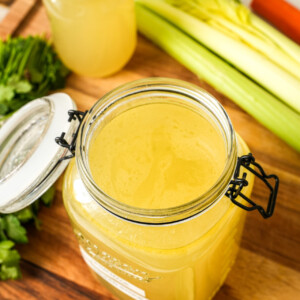
Step 6: Let the stock cool completely. Once cooled, transfer to large mason jars or an airtight container.
Helpful Tip: Since this is the base for other dishes, I don’t recommend adding any salt or seasoning to the stock. You want to keep it as neutral as possible, so it will be easier to adjust the flavor and taste later when you are making soups and stews.
What Recipes Should I Make With Homemade Chicken Stock
These are my favorite recipes to make with homemade chicken stock:

Substitutions
- Chicken Bones: you can use a chicken carcass from a 4-6 lb chicken or the leftover carcass from store-bought rotisserie chicken. You can also use leftover chicken drumsticks or wings.
- For Veggie Stock: If you prefer a plant-based option, you can substitute chicken bones with vegetable scraps like mushroom stems, tomatoes, or extra vegetables such as parsnips and leeks.
- Herbs: Feel free to experiment with different herbs like parsley, sage, or oregano to tailor the flavor of your homemade stock.
- Cooking Wine: This is optional, but I like to add cooking wine for a richer flavor. You can use Shaoxing wine, any Chinese cooking wine, dry sherry, mirin, or sake. Please note that mirin tends to be sweeter.
Equipment
- Large Cooking Pot
- Strainer
- Large Jars
How to Storage and Reheat
Storing: Once the stock has cooled to room temperature, transfer it to mason jars or any air tight containers. Store in the fridge for up to 5 days or freeze for up to 3 months.
Reheating: To reheat, simply warm the stock in a pot over low heat until it reaches your desired temperature.
Top Tips for Success
Use a Large Stock Pot: A large stock pot is essential for allowing all of the ingredients to fully submerge and simmer without overflowing.
Simmer Gently: Keep the heat low and let the stock simmer slowly. A rapid boil can cause the stock to become cloudy.
Season at the End: It’s best to add the kosher salt after the stock is finished. This allows for better control of seasoning.
FAQ
- Can I use rotisserie chicken to make stock? Yes! Rotisserie chickens are a great option because they have already been cooked, and their bones still contain plenty of flavor for making a rich stock. If you are using rotisserie chicken, you can skip the blanching step.
- What’s the difference between homemade chicken stock and veggie stock? The main difference lies in the main ingredient: chicken stock is made from chicken bones, while veggie stock uses plant-based ingredients like vegetables and herbs. Chicken stock has a richer flavor, while veggie stock is lighter and often preferred for vegetarian or vegan dishes.
- Can I make chicken stock with chicken broth instead of bones? Chicken broth is made from meatier parts of the chicken and won’t provide the same depth of flavor and richness as homemade chicken stock made with chicken bones or a chicken carcass.
- How long can I store homemade chicken stock in the fridge? Homemade chicken stock can be kept in the fridge for up to 5 days. If you want to keep it longer, freeze it in airtight containers for up to 3 months.
- Can I use homemade stock in any soup recipe? Yes! Whether you’re making a hearty soup or chicken soup, your homemade stock will provide the perfect soup base for any recipe.
More Recipes You’ll Love
Looking for other recipes like this? Try these:
Chicken vs Veggie Stock: How to Make It from Scratch
Ingredients
- 2 lb chicken bones
- 1 onion, cut into half
- 1 large carrot, cut into large chunks
- 2 celery stalks, cut into thirds
- 3 green onion, cut into thirds
- 1 inch ginger, sliced
- 6-8 clove garlic, peeled
- 2 tbsp Shaoxing wine , (optional)
- 2.5 L water
Instructions
- If you are using chicken bones, place them in a pot of water. Bring it to a boil. Blanch the chicken bone for a few minutes to get rid of any foam or scum. Drain and rinse under cold water to clean the chicken bone. If you are using leftover chicken carcass or rotisserie chicken, you can skip this step.
- In a large pot, add chicken bones, onion, carrot, celery, green onion, ginger and garlic. Add about 2.5L of water, or enough to cover all the ingredients.
- Bring it to a boil over medium-high heat. Skim off any foam or impurities that has risen to the top. Then add 2 tbsp of cooking wine (optional)
- Reduce the heat to low. Cover the pot with a lid and let it simmer for at least an hour. For more concentrated stock, you can simmer it for a longer time (3-4 hours).
- After simmering, remove the chicken and vegetables from the pot. Strain the liquid through a fine-mesh sieve to remove any small bits.
- Let the stock cool completely. Once cooled, transfer to large mason jars or an airtight container. Store in the fridge for up to 5 days, or freezer for up to 3 months.